
Ever found yourself scratching your head over kilograms and pounds? You’re not alone! Converting 200 kilograms to pounds might seem like a math puzzle designed to trip you up, but fear not. It’s not rocket science, and it won’t require a degree in physics to figure it out.
Understanding Weight Conversions
Weight conversions between kilograms and pounds serve practical purposes in daily life. Many people encounter these units when dealing with fitness, travel, and dietary scenarios.
Importance of Weight Units
Weight units hold significance in various fields. Understanding the difference between kilograms and pounds facilitates clear communication in fitness, science, and commerce. In fitness, individuals often track their weight in pounds, while many countries utilize kilograms for health metrics. Being aware of these units helps avoid confusion during workouts or consultations with health professionals. As a result, knowing how to convert between them becomes essential for effective understanding across different contexts.
Common Conversion Methods
Several methods exist for converting kilograms to pounds. A simple method involves multiplying the kilogram value by 2.20462 to obtain pounds. For instance, converting 200 kilograms results in 440.924 pounds. Using an online calculator offers another efficient way to perform conversions quickly. Many smartphones and computers have built-in conversion tools, making the task even easier. Lastly, individuals can refer to conversion charts that list common values, simplifying the process for quick reference.
Converting 200kg to Pounds
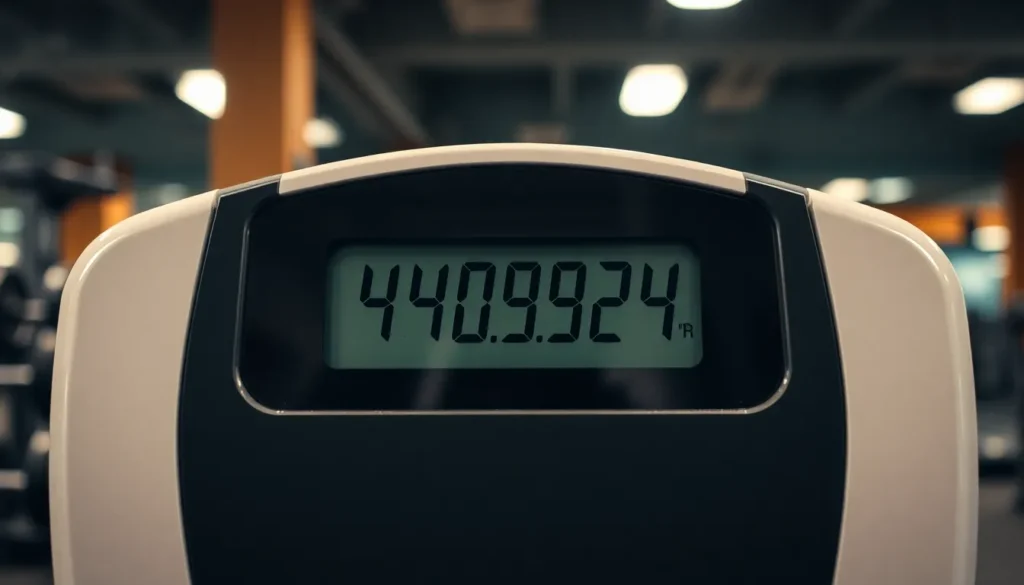
Converting 200 kilograms to pounds involves a simple calculation. The standard conversion rate facilitates quick and accurate results.
Using the Standard Conversion Rate
Multiplying the kilogram value by 2.20462 provides the conversion to pounds. For instance, 200 kg multiplied by 2.20462 equals 440.924 pounds. This conversion rate applies universally, ensuring consistency across various contexts. Professionals and fitness enthusiasts regularly use this method for precise measurement in training and health assessments. Individuals can easily remember this figure for quick reference. This straightforward approach makes weight conversions accessible for everyday situations.
Quick Reference Chart
A quick reference chart offers immediate conversions for various weights. Below is a chart showing common conversions from kilograms to pounds:
| Kilograms (kg) | Pounds (lbs) |
|---|---|
| 50 | 110.231 |
| 100 | 220.462 |
| 150 | 330.693 |
| 200 | 440.924 |
| 250 | 551.155 |
This chart simplifies the conversion process, making it easy to find quick equivalencies. Such resources prove helpful during travel, fitness planning, or nutritional guidance. By consulting this reference, anyone can swiftly determine weight in pounds from kilograms.
Practical Applications of Weight Conversion
Understanding weight conversion becomes essential in various contexts, impacting daily decisions and professional settings.
Everyday Scenarios
Fitness enthusiasts frequently encounter weight conversions during training and dietary planning. They often rely on accurate measurements to achieve specific goals, like calculating protein intake or adjusting workout weights. Travelers must understand weight limits for luggage; converting kilograms to pounds helps avoid extra fees at airports. Cooking also requires precise measurements; a recipe that specifies 200 grams of an ingredient becomes pertinent in meal preparations. Parents monitoring their children’s growth track weight changes in both units, ensuring children meet health standards. Clarity in these scenarios empowers individuals to manage weight-related tasks effectively.
Industrial and Commercial Use
Industries rely on weight conversions for numerous operations, including shipping, manufacturing, and logistics. Companies engaged in international trade must convert weights to meet regulations and standards accurately. Accurate weight conversion facilitates compliance with packaging requirements; the food industry often uses both kilograms and pounds on labels. In healthcare settings, professionals convert weights when assessing dosage requirements, ensuring patient safety. Engineers frequently convert weights when designing equipment or machinery. The construction industry requires precise material weights, influencing project budgets and safety protocols. Effective communication hinges on clarity, making weight conversions vital across countless commercial applications.
Tools and Resources for Weight Conversion
Weight conversion is simpler with the right tools and resources at hand. Various options exist for quick and accurate conversions.
Online Calculators
Online calculators streamline the process of converting kilograms to pounds. Users can find several reliable websites offering this functionality, including UnitConvert.net and CalculatorSoup.com. Inputting the weight in kilograms yields an instant pound value. Many calculators also cater to additional units, making them versatile for different needs. This resource stands out for its accessibility, as they’re available on various devices, ensuring users can convert weights anytime.
Mobile Apps
Mobile apps provide a convenient solution for weight conversion on the go. Popular applications like Unit Converter and ConvertPad feature user-friendly interfaces and quick access to multiple measurement units. Users can download these apps for smartphones, and they often support offline functionality, allowing weight conversion without an internet connection. These apps enhance daily activities, whether users are tracking fitness goals or managing grocery purchases, making them essential tools for everyday decisions.
Understanding weight conversions like 200 kilograms to pounds is essential for various aspects of daily life. Whether it’s for fitness goals travel plans or dietary needs having a solid grasp of these conversions simplifies decision-making.
With tools like online calculators and mobile apps readily available there’s no need for confusion. This knowledge empowers individuals to communicate effectively in personal and professional contexts.
Embracing these conversions can lead to better choices in health fitness and beyond. It’s a small yet impactful step toward enhancing overall awareness and efficiency in everyday tasks.


