
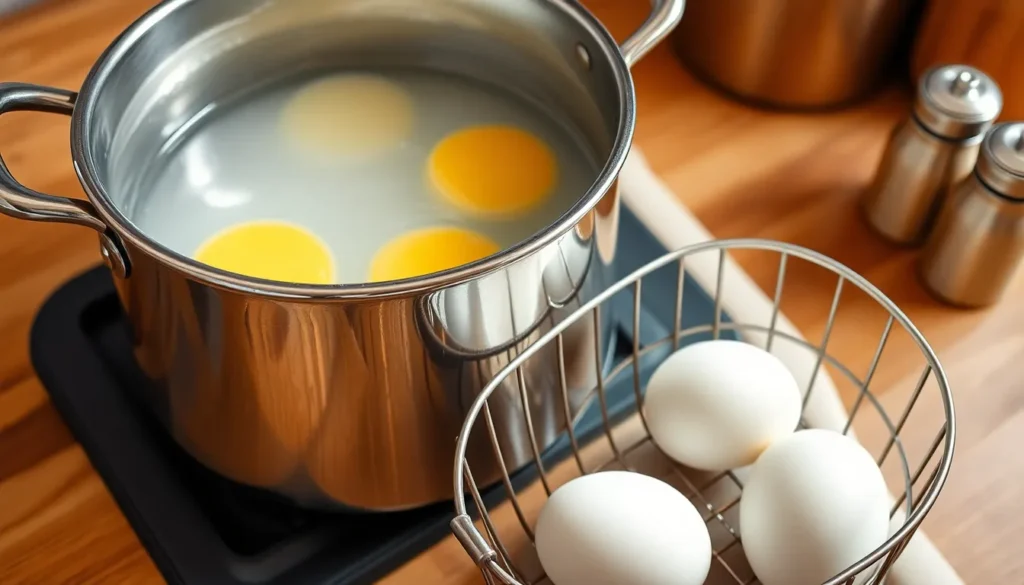
Boiling eggs might seem like a simple task, but it can quickly turn into a culinary conundrum. Ever find yourself staring at a pot of water, wondering if you’re about to create a masterpiece or a rubbery disaster? Fear not! The art of boiling eggs is easier than you think, and with just a few tips, you’ll be on your way to egg-cellent results.
Understanding Egg Boiling Times
Achieving the perfect boiled egg hinges on several important factors. Understanding these can simplify the process and enhance results.
Factors That Affect Boiling Time
Egg size influences boiling duration significantly. Larger eggs take longer to cook compared to medium or small eggs. Starting with room temperature eggs reduces cooking time. Altitude also plays a role; at higher elevations, water boils at lower temperatures, which can extend cooking times. Freshness matters too; older eggs peel easier but may require a minute or two more to achieve desired firmness. Lastly, water volume and pot size impact heating efficiency; adequate space allows for even cooking.
Different Types of Eggs
Different types of eggs also require varying cooking times. Chicken eggs, the most common type, should boil for 9 to 12 minutes depending on preference. Duck eggs are larger and need about 12 to 15 minutes for similar results. Quail eggs, smaller and delicate, only need around 4 to 6 minutes. Other varieties, like goose or turkey eggs, require longer boiling times due to their size. Each type contributes unique flavors and textures, warranting adjustments in boiling times.
Soft Boiled Eggs
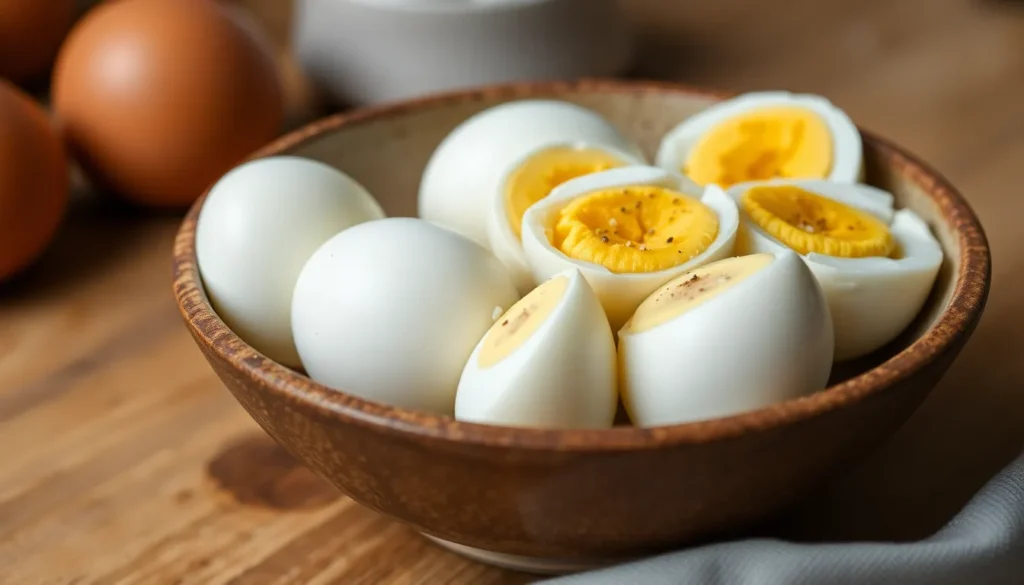
Soft boiled eggs offer a deliciously creamy yolk while keeping the whites tender. Achieving this delightful texture requires precise timing.
Ideal Cooking Times
For soft boiled eggs, timing varies based on preferences and egg size. Generally, cooking eggs for 4 to 6 minutes yields the best results. A 4-minute boil results in a runny yolk, while a 6-minute boil adds a slightly firmer texture. Eggs at room temperature require a shorter cooking time than those straight from the fridge. Adjustments may occur if the altitude changes; higher altitudes can necessitate additional cooking time.
Tips for Perfect Soft Boiled Eggs
Start by gently placing the eggs into simmering water to avoid cracking. Reducing heat to maintain a gentle simmer ensures equal cooking. Using a timer is essential for consistent results. After boiling, transfer the eggs to ice water immediately to halt the cooking process. Peeling eggs under running water helps remove shells more easily. Season with salt and pepper just before serving for enhanced flavor.
Hard Boiled Eggs
Hard boiled eggs provide a firm texture and fully cooked yolk. Achieving the perfect hard boiled egg requires attention to cooking times and technique.
Ideal Cooking Times
For hard boiled eggs, the ideal cooking time ranges from 9 to 12 minutes, depending on desired firmness. Nine minutes offers a slightly soft center, while 12 minutes results in a fully cooked yolk. Elevation can affect cooking times, so adjustments may be necessary at higher altitudes. Starting with room temperature eggs can reduce cooking time by approximately one minute compared to cold eggs straight from the fridge. Consistency in timing helps ensure even cooking across batches.
Tips for Perfect Hard Boiled Eggs
Starting with fresh eggs simplifies peeling after cooking. Placing eggs gently in cold water helps prevent cracking during boiling. Bringing water to a rolling boil before lowering the heat to medium ensures an even cook. A timer remains crucial, as overcooking can result in a greenish-gray ring around the yolk. After boiling, transferring eggs to an ice bath stops the cooking process instantly. Cooling for at least five minutes makes peeling easier and improves texture. Seasoning before serving enhances flavor.
Variations in Cooking Methods
Boiling eggs varies greatly depending on the chosen method. Both stove top and Instant Pot techniques yield differing results while maintaining convenience.
Stove Top vs. Instant Pot
Stove top boiling involves placing eggs in a pot of cold water. Heating the water allows control over the cooking process but requires careful monitoring. The Instant Pot simplifies this process, providing consistent pressure cooking temperatures. In an Instant Pot, users set specific times based on desired softness. Cooking hard boiled eggs takes about 5 to 7 minutes in the pressure cooker, while stove top methods require 9 to 12 minutes. Each method has its advantages: stove top for traditionalists and Instant Pot for those seeking speed and efficiency.
Steaming vs. Boiling
Steaming eggs offers a gentler alternative to boiling. With steaming, the eggs become tender without the risk of cracking often caused by submersion. Cooking times for both methods overlap but differ in technique; steaming soft boiled eggs takes roughly 6 to 8 minutes. Using a steamer basket elevates eggs and allows for optimal heat circulation. Boiling, conversely, immerses eggs in water, which can result in firmer whites when cooked longer. Both methods provide delicious eggs, yet their textures and convenience appeal to various preferences.
Mastering the art of boiling eggs can elevate any meal. With the right techniques and timing anyone can achieve perfectly cooked eggs whether soft or hard boiled. Understanding the nuances of cooking times based on egg size and starting temperature is essential for consistent results.
Experimenting with different methods like stove top boiling or using an Instant Pot can also enhance the cooking experience. Each method offers unique benefits that cater to individual preferences. By following the tips outlined in the article anyone can enjoy delicious eggs that are easy to peel and full of flavor.


